Showing posts with label guinea pig. Show all posts

Wednesday, 17 February 2010

Lake Titicaca Reed, then More Ceviche, Confit Guinea Pig and Mint & Pisco Mousse

OK so I'm skipping alot of my trip due to poor/unmemorable food and we're in Puno, close to the Peru/Bolivia border, next to Lake Titicaca.

 
Met this woman grinding wheat to make flour. 


While doing a tour of the lake, we stopped off at the Uros floating island. I don't really have a meal to report from there, although we did get a chance to try one of the indigenous staple foods, the reeds that grow around the shores of the immense lake. It was fairly bland, I suppose I'd probably liken it to daikon - a very mild radishy flavour. However, as a free and almost limitless foodsource for the locals, it wasn't bad. Plus, I was told it contains heaps of Iodine which prevents goitres. You learn something new every day!

 Me, eating Reed.

After arriving back from the island, Kiwi and I stumbled upon a small restaurant that was offering a two course lunch for 2.50 Soles (About £0.60 / AU$1). The food wasn't terrible (I had Moron Soup to start, followed by Pan-Fried Fish and Rice) but for $1, you really can't complain! (I still don't really know what moron is though!)

The Lunch Menu

In the evening, we are taken to a very nice restaurant (especially by Peruvian standards) to which the main downside is it offers "traditional" dancing while we eat. Painfully touristy.

I apologise in advance for my lack of photos, I cannot remember why but I didn't have my camera with me... ANYWAY, on to the good stuff, the food...

V and I shared a bottle of Concho y Toro Exportacion - a delicious Argentinian red - while I had Pejerrey (Kingfish) Ceviche for starter and Confit Guinea Pig for main.

The Ceviche was good but not great; it needed more lime and alot more chilli, but the presentation was excellent; it looked fantastic on the plate.

The Confit was served with quenelles of mushroom mash, sauteed vegetables and red wine jus - it was quite delicious, the flavours worked brilliantly together, but there was far too much jus so it did overpower the dish somewhat, and the cuy (Guinea Pig) was undercooked. It was cooked, but as a confit it should have been cooked slower and longer - the meat was not tender enough and it was still fairly fatty. The presentation was not bad, although the plate did look a little plain, it definitely needed some more colour.

I also ordered dessert - not because I could possibly eat any more, but purely because it sounded fascinating - Mousse de Muña Sour en Terciopelo de Ayrampo (Andean Mint & Pisco Sour mousse in Ayrampo Velvet).
Disappoingly, however, it was by far the worst course. The Mousse contained too much mint, so as you cannot taste the Pisco, and it was far too firm; there was too much gelatine in the mix. It slmost felt like eating a sponge, flavoured with terribly artificial peppermint extract. Ayrampo is a type of cactus seed, apparently, but I failed to recognise any type of "velvet", whatever it was supposed to be!

Tuesday, 16 February 2010

Guinea Pig again: Chivay, Peru

Heading across Peru to the Colca Canyon, we stopped in a small town for lunch at a small cafe/restaurant. They were expecting us, and had laid out an enormous and delicious buffet for us. We were treated to Alpaca steaks, Llama kebabs (with a satay-ish sauce), a spicy fish stew, and various other fantastic dishes.

Later in the evening, however, having arrived in Chivay, we were to visit an indigenous family to sample some real Peruvian home cooking. Our welcoming guests (who spoke absolutely no English) invited us to help prepare the dinner, and I jumped at the chance to learn some new techniques.

Sylvana, the new commis chef.

I wasn't quite expecting the job they gave me, however. Having joined the family in the kitchen, they gave me a live guinea pig, and explained (with the help of our Peruvian guide/translator) how to kill and prepare it. I'm not squeamish by any means, but it was the first time I had had to kill a mammal for food. I'd killed fish before, but that just seems so much easier. They don't squeak or wriggle quite so much.

Still, holding the Guinea Pig firmly behind it's head, I pulled and twisted its neck, as directed, until I heard it break, then pulled and twisted some more to make sure. You'd be surprised how easy it was; the Guinea Pig died quickly and humanely, and to be honest I was quite proud of how well it had gone.


Anyway, the job wasn't over as I had to pull the fur off the carcass, before slicing open the belly and removing the organs. From there, I left it to the lady of the house to finish preparing the meat and cook it, while I returned to the dining room with the others, most of whom hadn't wanted to help/watch me kill their dinner.

Twenty minutes later and our food was presented to us, starting with a typical yet tasty Quinoa and Vegetable Broth, followed by seared Alpaca Steaks, and finally the unlucky Guinea Pig. I can't say it tasted any better knowing that I'd slaughtered it myself, but I am happy to have taken part and experienced that, and I would definitely do it again when called upon.

After dinner, we were all fairly exhausted after a long day's travel but rumours of the Highest Irish Pub in the World (we were at about 4000m altitude here) spurred us on long into the night.

Monday, 15 February 2010

More South American Cuisine

 
While much of the food in Ecuador and Peru is typical 'peasantry' cuisine - cheap cuts, lots of rice and potato - there were some fantastic dishes to be had, and as we headed inland and into Peru, llama and goat were common on menus. Llama is eaten in a wide variety of ways, from steaks to stews to kebabs. It's a very good and versatile meat, not entirely unlike lamb, and it's the cheapest meat in most parts of Peru, at least outside of the tourist restaurants!


In Southern Ecuador, I again tried Guinea Pig, although this was at a ranch in the middle of nowhere. The farmer, who breeds Guinea Pigs for food, slaughtered one for us and after preparing it with lots of cumin, chilli, garlic and ground coriander, his wife cooked it on a heated stone. It tasted much, much better than the one I'd tried in a restaurant in Quito, although I still found there to be very little meat on it.


Near Cuenca, the richest city in Ecuador, a group of us went walking through the Cajas National Park, home to wild llamas and alpacas, as well as lakes teeming with Rainbow Trout (brought here by European settlers). For lunch we stopped at a small roadside restaurant where the guide recommended we have the trout, since it was not only as fresh as you can get, but it was also a pest so we'd be helping the environment - I wasn't about to refuse! The fish was simply delicious, despite having been deep fried, and came accompanied by a typical Ecuadorean salad with lots of chilli and lime, and rice.Obviously, presentation wasn't really that much of a big deal in restaurants here, but I think it really added to the rustic charm; it felt like you were eating like a local, not like a tourist where everything is exaggerated to seem "traditional".


Sunday, 14 February 2010

South America

It's been a while since I travelled South America, but I still clearly remember some of the fantastic foods I tried there.

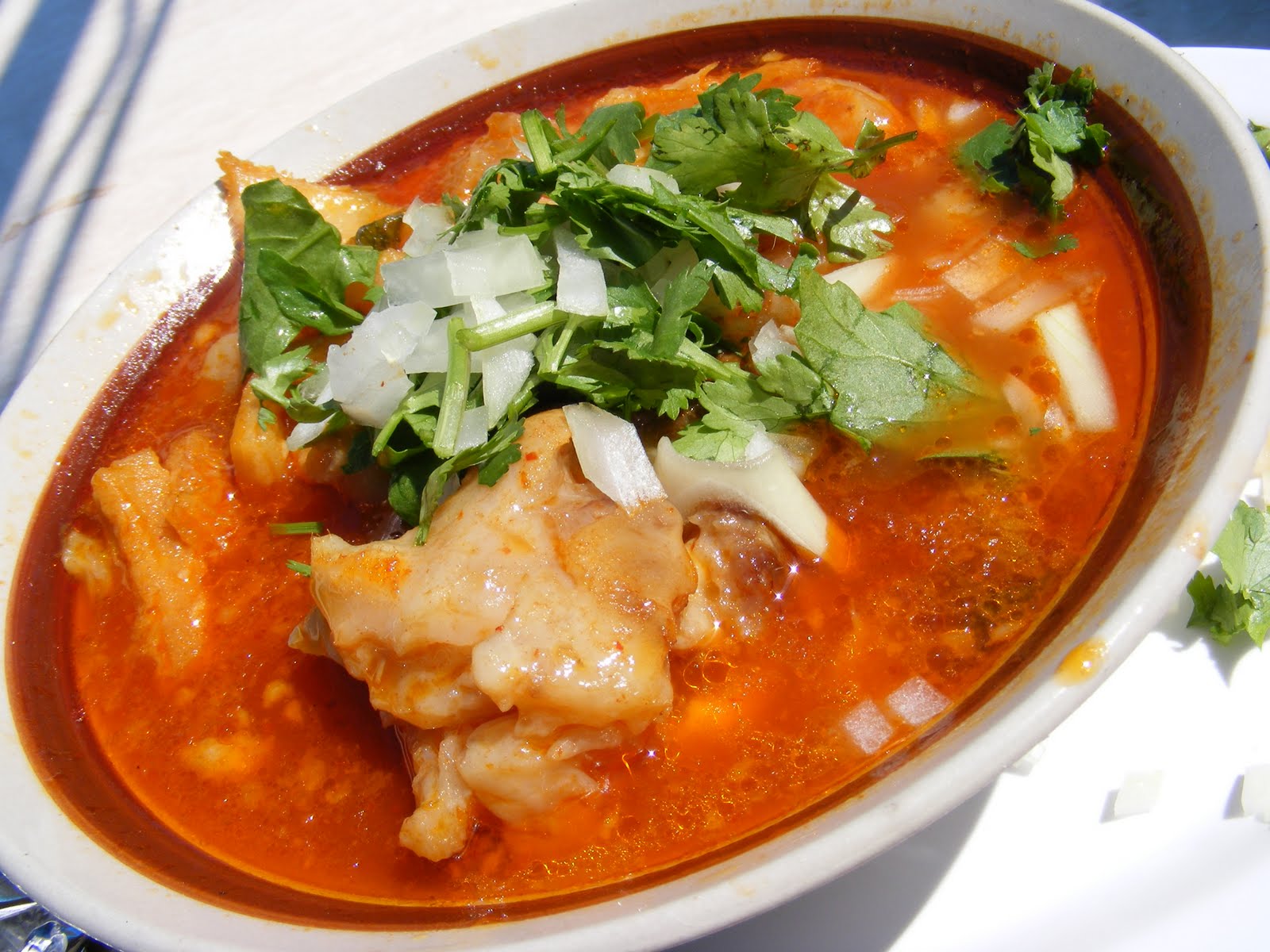
My first stop was Ecuador, where Cuy (Guinea Pig) is a delicacy. Me being me, I tried it on my first day in a frankly dingy-looking restaurant in central Quito. As a starter, I had Caldo de Pata, which I knew from my very limited Spanish was some kind of soup. It turned out to be a creamy broth containing boiled cow hooves, lots of soft herbs and quinoa; it was surprisingly delicious, and extremely filling. Apparently, Ecuadorian men believe it to increase virility, I can't say I noticed any difference though!


Caldo de Pata
Image courtesy of Street Gourmet LA


My main course, the guinea pig, was much more disappointing. It had been breaded and deep fried, and it was barely distinguishable from a KFC. In taste, it was fairly close to rabbit, only much fattier. I can't go into much more detail because there really isn't anything else to say. It wasn't offensive, but it was a long way from being good. Fortunately, I blamed the method of cooking and the quality of restaurant, and tried guinea pig a few times across Ecuador, and it did improve elsewhere.


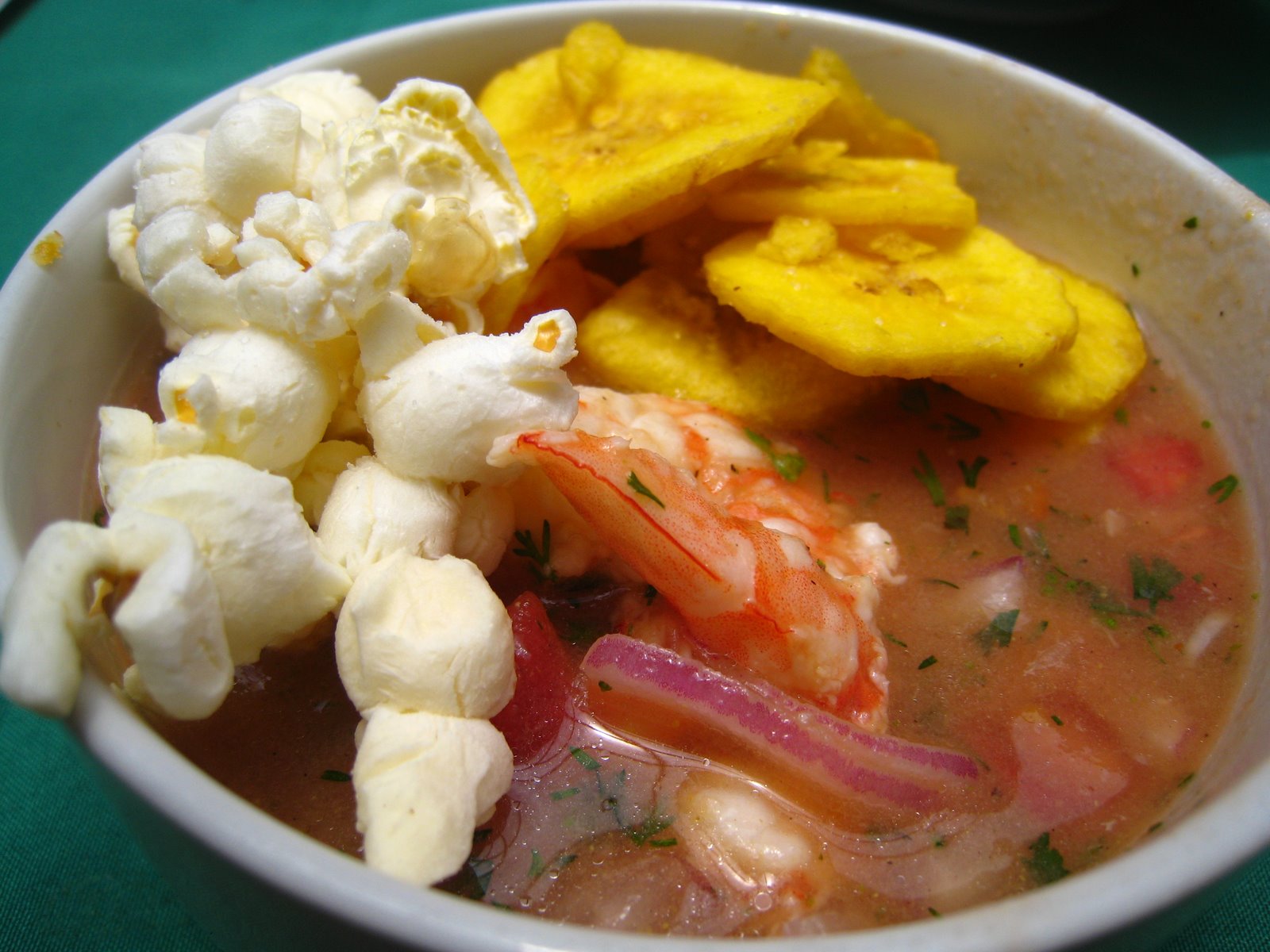
A few days later, still in Quito, I tried another Ecuadorean speciality, Ceviche. I love ceviche, I'd had it a couple of times in England, and this first time trying it in it's native country I opted for the Ceviche de Concha (black clams). I wasn't really a fan of the clams, however, as they were very inky, but the ceviche I had elsewhere in Ecuador and Peru was always fantastic (only I didn't order the Concha again!).


Prawn Ceviche
Image courtesy of Picasa Web


Ecuadorean ceviche is different from the (slightly inferior) Peruvian edition in that it is more like a soup. In both cases, the fish is served in lime juice with heaps of chilli, shallot and chopped coriander, but in Ecuador it is traditiionally in a thin gazpacho-type tomato broth, which adds that extra bit of colour and flavour to the dish.

After my ceviche, I had the most tender beef tongue you can possibly imagine; it was divine, seared and served slightly pink with a simple parsley cream sauce and rice.